Can a beginner climb Mount Toubkal?
A first summit trek on Mount Toubkal can be a reasonable goal for a hiker who already manages long uphill days, keeps moving comfortably on rocky descents, and can take a suitably paced guided itinerary in stable conditions. A first mountain and a first serious hike are different starting points. If your recent walks are mostly flat, or you have yet to descend on uneven rock when tired, start with an Imlil valley walk and use it to judge what to train.
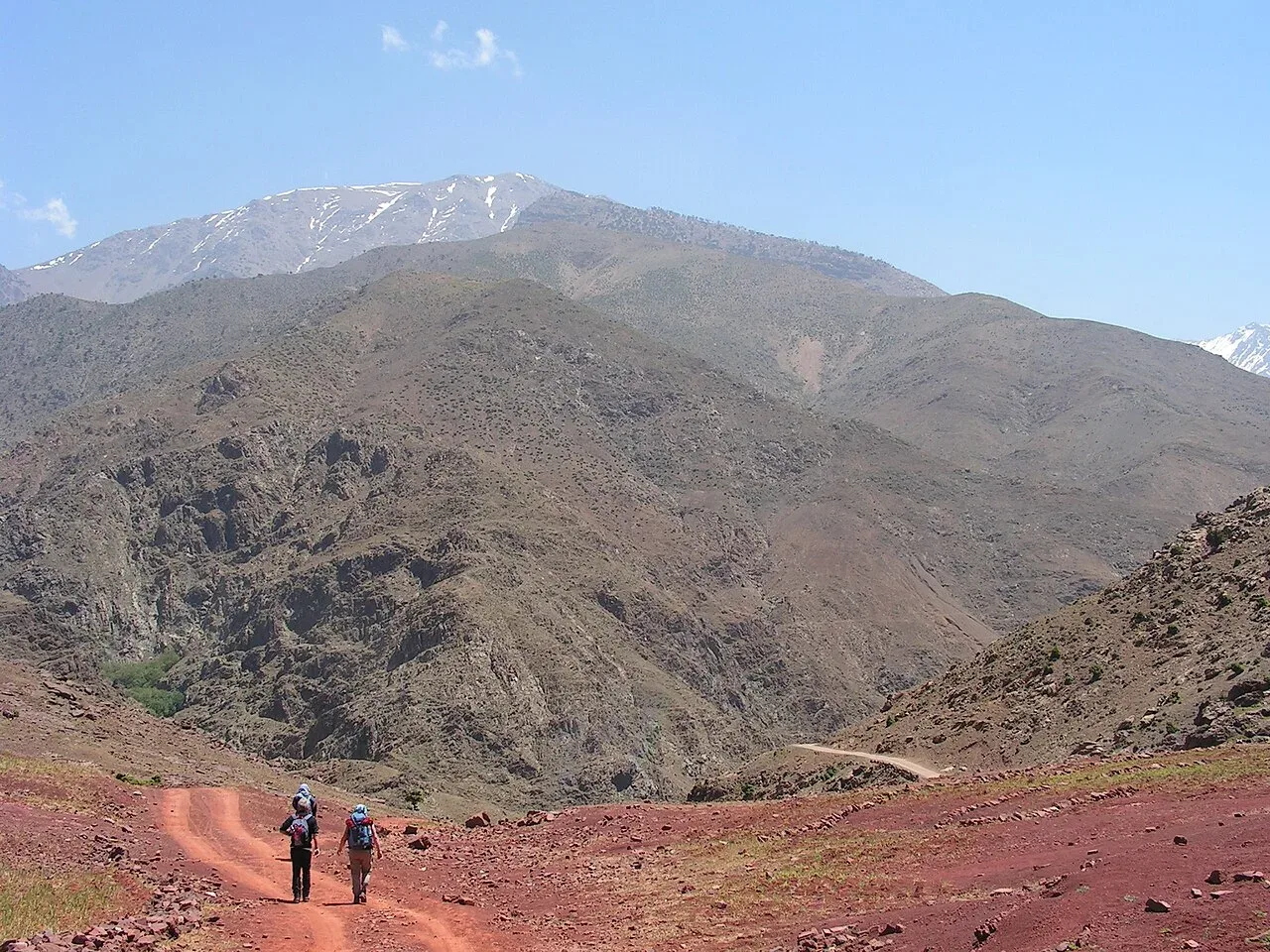
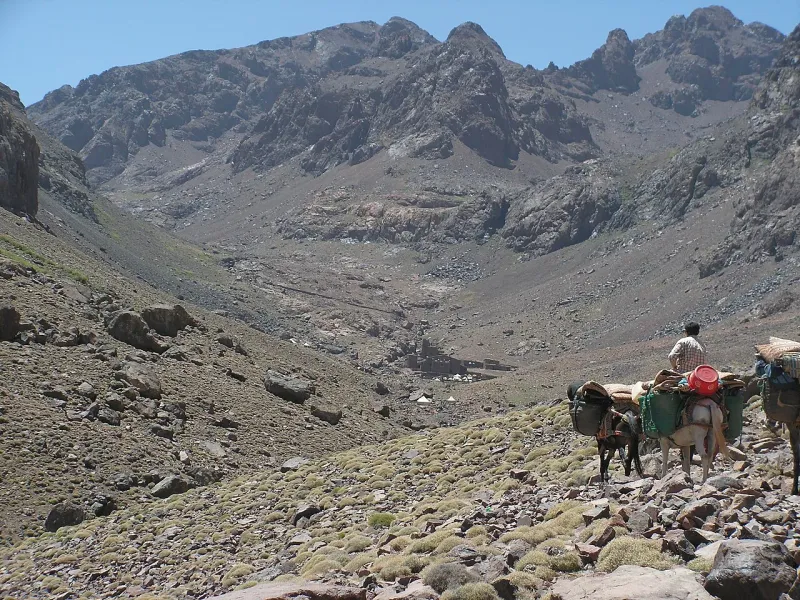
The usual route climbs from Imlil at around 1,741 m to the refuges at about 3,200 m, then to the 4,167 m summit. The Marrakech-Safi mountain walking brochure lists the first day at 10 km and 1,520 m of climbing. For a second day that goes from the refuge via the summit all the way to Imlil it shows 16 km, 970 m of climbing and 2,480 m of descent. Different route starts can change those figures. The relative size of the descent is the part to retain.
Fitness for a first trek
These checks translate the published route profile and Kasbah du Toubkal’s local day walks into practical questions. The checks are observations to discuss with your guide. Sources checked 19 November 2026.
Build the downhill skill near home
Choose a repeatable hilly walk and record how long the descent takes after your longest climb. Go back with the shoes, socks and pack you intend to bring to Morocco. Check for heel movement uphill and toes hitting the front while going downhill. If you plan to use poles, practise both climbing and lowering yourself down rocky steps before carrying them into the High Atlas. Look for a relaxed pace you can repeat, since the upper slopes of Toubkal give you little benefit from having rushed the lower part.
When you can handle that walk well, try a pair of hiking days with a moderate first day. Use the second morning to learn where you get stiff, where the pack rubs, and whether you still have the attention to negotiate uneven stones. A longer, steeper practice hike can build strength and give you more reliable information than adding distance on pavement. If your training area is low, it still measures walking and recovery. The altitude guide covers the separate question of response to thinner air.
Use Imlil for a test morning
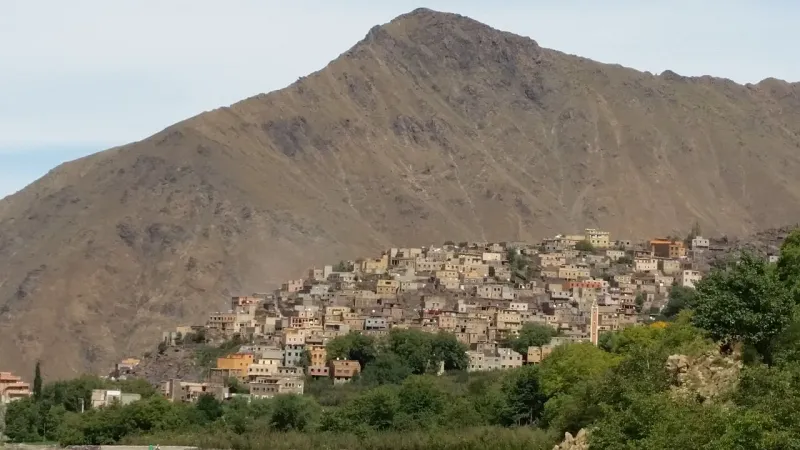
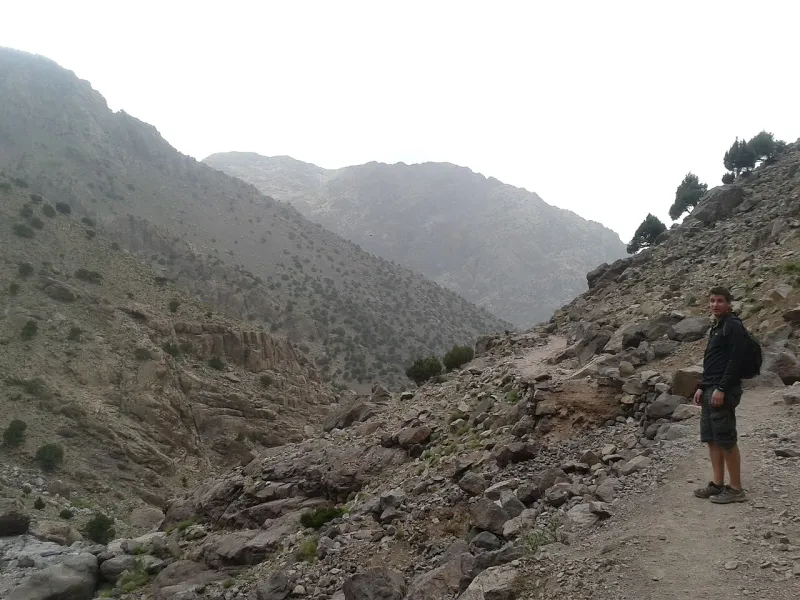
The kasbah publishes approximately 45 minutes for its Targa Imoula outing, about 45 minutes to an hour for Mzik, and roughly four hours for either the Tizi n’Tamatert or Chamharouch day walks. Those times begin at the kasbah. The elevation, start and pace at your own lodging change what is realistic. For a shorter arrival day, use a village walk to get used to the shoes and test your layers. For a full practice day, the trail to Sidi Chamharouch gives you a meaningful look at the terrain below the hut without committing to the upper stage.
Try to hire the local guide who will lead your summit walk for the outing if scheduling permits. Let them see how your feet and breathing settle on the uphill and how you move on loose rock coming down. The turnaround on this outing should leave you ready for the next morning. It makes sense to shorten a practice hike if the day already seems longer or harder than you expected.
Choose where to split the descent
In two days, the descent starts immediately after the summit and usually continues all the way to the valley after a stop at the refuge. Lunch does not reset the time already spent on your feet. A three-day plan with a second refuge night can move the big valley descent to the next morning. It still involves another night high, so discuss your route and sleeping elevations before booking. One way to spread the trip is a village night or acclimatization walk first, then the refuge and summit itinerary. A product described as three days can use any of these patterns. Compare the daily stages, including which stage the third day covers.
Pack your daypack for the whole summit morning, even if a mule carries the main bag to the refuge on the approach. Test the headlamp with cold fingers, learn which pocket has your gloves, and keep something you know you can eat while moving. On the descent, give the rocky slopes your full attention even when the valley is in sight. Stop somewhere level for photos and a snack so your feet and attention can work together on the loose sections.
Make weather and pace decisions before paying
Give the guide your real hiking experience, including elevation gain, recent downhill hours and how you did on consecutive days. An operator can then choose a sensible pace and say whether your dates are likely to require winter equipment. Get a direct statement on what happens if snow changes the required skill level. If an equipment list adds crampons or an ice axe, the trek also needs the instruction and appropriate boots covered in the winter guide. For someone starting at the same time as they are learning snow travel, conditions may make a lower walk the better match.
Keep an arrival evening for packing and fitting gear and a final buffer before a fixed flight. Share the proposed turnaround before leaving the refuge, including the first point at which the guide will reconsider the day. A first High Atlas hike can be a village or shrine route, an overnight to the refuge, or the full summit. Pick the version in which your slower party member has enough energy and daylight to come all the way back down.
A night at a guesthouse in Imlil also gives you time to sort a minor issue without sacrificing the trek. A sore heel, a broken pole lock or a headlamp with an unfamiliar battery can usually be dealt with in the village. The same fault can be much harder to fix at the refuge before dawn.