Should you take two or three days for Mount Toubkal? Take three if an extra refuge night after the summit would make the descent more manageable. If the reason for adding a day is altitude, choose the schedule by the nights before the summit. The published two- and three-day trips below try the summit on the same walking day.
Compare the night stops
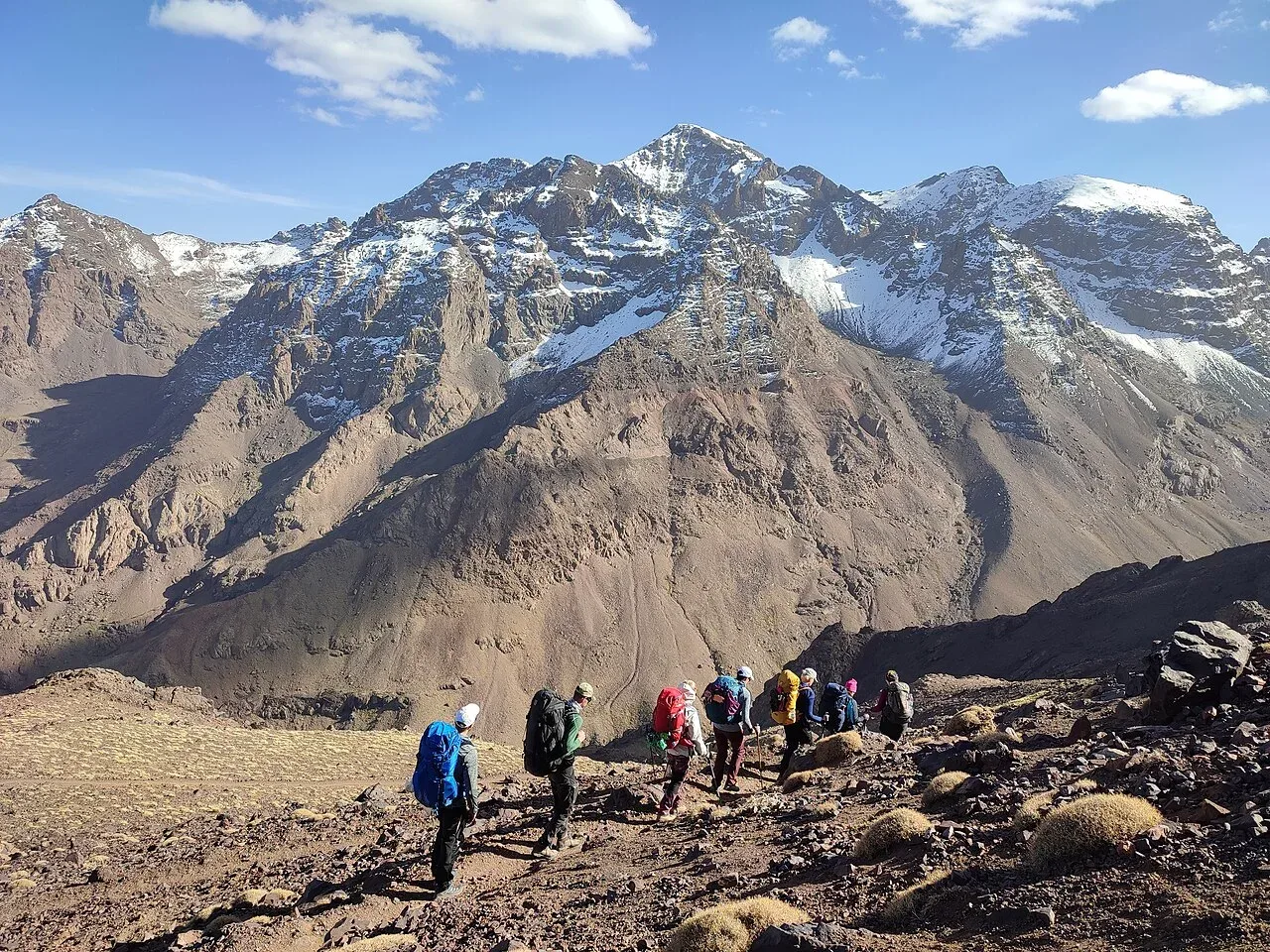
A pair of published itineraries begins with the road from Marrakech to Imlil and the climb past Aroumd and Sidi Chamharouch. Both sleep at the refuge, around 3,200 m, on the first night. The second day is where the routes appear to diverge on the booking page, but the first difference is after coming down from the summit. On the short plan you pick up bags and head back to Imlil. The three-day listing gives you a second hut night and the descent to the village the next day.
What one operator schedules on each day
Schedule
First night
After the summit
Two days1
Refuge
Descend to Imlil the same day
Three days2
Refuge
Stay at the refuge again, then descend on day three
Use the named overnight stops to see when the party sleeps in Imlil or at the refuge. “Two nights in the mountains” could mean Imlil and the refuge or two nights at the refuge. Put summit morning next to the previous night’s bed and record where that walking day ends. That quick check helps distinguish a longer trip made for easier descending from an itinerary that changes the approach to altitude.
The two-day plan from Imlil
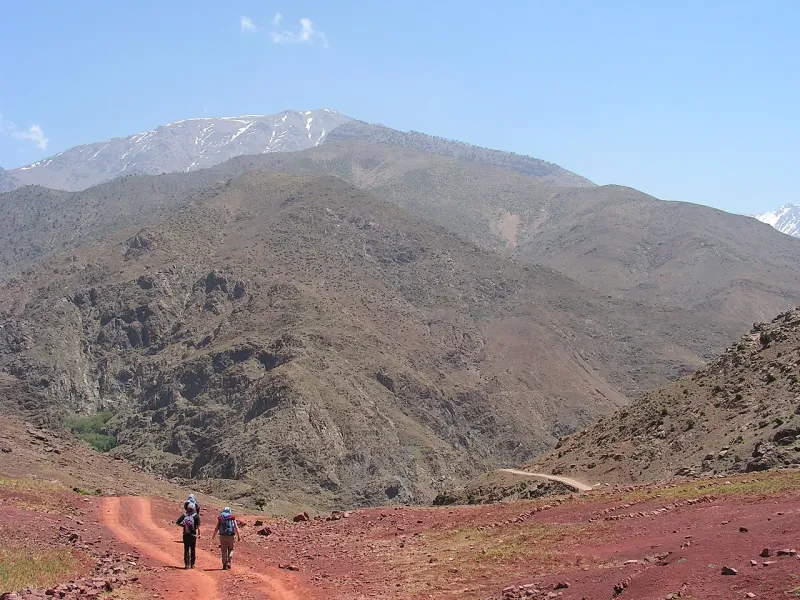
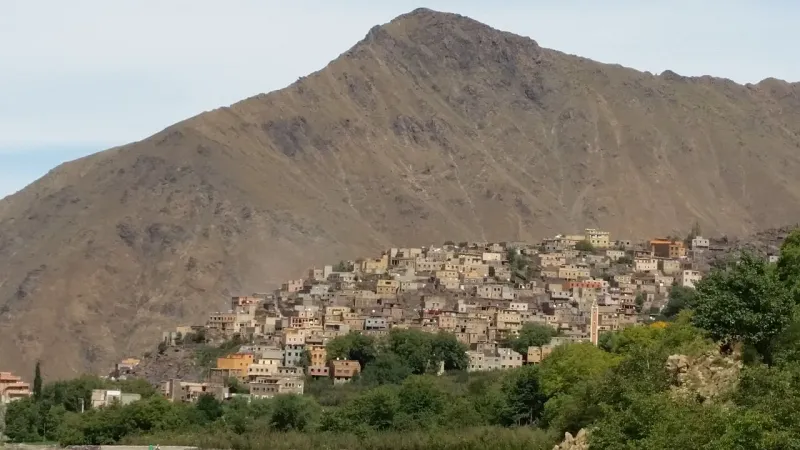
The first day is a full walk from the village to the huts. You start near the head of the road, then climb out of the inhabited valley. A late arrival from Marrakech compresses the guide handoff, lunch and bag arrangements into the same morning as the climb. Have your day bag packed before the transfer and agree on what the guide or support crew will take from you in Imlil. A late trailhead arrival leaves less daylight for the long refuge approach. A valley night can preserve a full walking day where the remaining time is too short.
On the second day, the return to the base of the summit slope is only the first part of the descent. The schedule still needs time to collect your things, eat and walk the rest of the valley. The regional guide’s sample allows around ten hours for the combined summit and descent to Imlil. Read the difficulty and altitude guide for what contributes to that long day. A city pickup can start at the riad door or on a nearby vehicle-accessible street. The driver’s contact links a delay there to the guide meeting at the trailhead.
Three days, two refuge nights
The published three-day plan still climbs to the refuge on day one and aims for the summit the following morning. Staying at the hut after the attempt means you only have to get back as far as the refuge that afternoon. The last day is mostly about dropping to Imlil and catching the ride out. The extra bed and meal arrangements need to be clear before you commit, and you can read the refuge comparison if the room type or hut is flexible.
This works well for a group that has the ability and experience for the ascent but wants a shorter second day. Some people find an additional night at the hut uncomfortable. If sleeping high again after the attempt is a concern, the itinerary can only move the party to the valley that day if the walkers still have the energy and daylight for the last descent. A bed or other contingency in the valley then matters. Decisions about altitude symptoms belong with your guide and medical advice. The room reservation should stay secondary to them.
An extra day before summiting
Spell out what a useful extra day would accomplish. An Imlil arrival and a lower valley walk can make logistics easier and reduce the travel and walking you do on one day. It does not put you at the sleeping altitude of the main hut. A route that adjusts the rate of climb toward higher overnight stops is a separate plan. Discuss the exact itinerary with a qualified guide and choose it based on the group’s experience and health advice.
The version to get in writing looks like this.
Field
What to request
Arrival
Separate arrival and first walking day if you want both.
Nights
Name and elevation of each overnight stop.
Summit
Earliest planned summit morning and the decision point.
Descent
Where everyone sleeps after the attempt.
Delay
Changing nights, guide time, transport and the cost of each.
One-day attempts and alternatives
The major saving on a one-day Toubkal climb is the hut night. The major constraint is that you fit the whole route, including both climbs and both parts of the descent, into one push. You still need to resolve guide arrangements and access. A time advertised by a fast party tells you little about what a less acclimatised group can do. A qualified guide needs to weigh the route and start time against the experience and pace of the whole party. A valley walk from Imlil is a more flexible day outing if you have a single free day and want time to see the landscape.
Going longer can mean changing the actual route. The Toubkal circuit via Ifni adds a lake, passes and nights in other valleys before the summit. That schedule spreads Toubkal into a larger trek, with additional baggage and weather arrangements. It shares the refuge area with the direct climb but has different escape options.
How to choose the booking
Write down your arrival time in Marrakech, whether the party wants to walk on arrival day, and when you next have fixed transport. Compare the published price and inclusions for the days you can use. A longer itinerary may price more because it includes a bed and meals after the summit. Moving the first night can change the cost of rooms or transport as well as the order of the walk. On a group departure, the hotel pickup and end of the walk follow the group’s itinerary. Compare shared and private arrangements for one traveller if you are coming alone. A separate turnaround can require another guide or pickup.
A date-flexible camp or hut reservation and a Marrakech stay with a little room at either end can help. Make sure each participant gets the same last version of the schedule. Once you have it, look at day two without the summit: where you are if the weather stops the attempt, how you get down and which part of your booking can move. A workable fallback gives the extra day an actual purpose.
Three-day itinerary variations
There are at least two useful ways to spend the extra time on a three-day Toubkal trek. In the published direct comparison above, take the Imlil approach to the refuge on the first day, visit the summit on the second and return to a refuge bed there. The third day is the walk out. That makes the summit day shorter by the walk between the refuge and Imlil. It also moves the transfer to the following day and means one more night in the same high basin.
A completely different three-day itinerary approaches through the Azzaden Valley and places a night before the walk to the summit refuges. A route over a pass may reach the same huts from a different valley. The first bed and named pass tell you which version the operator is selling. The extra day here is another day of walking before the summit, with its own ascent and descent. It can suit someone who wants several valleys and an additional night on the approach. A traveller chiefly seeking time to adapt to elevation should assess the height of that extra bed and the rate at which the full plan climbs, with the guide or a travel clinician. Do the same comparison for any itinerary with a night near Imlil. The Toubkal and Kilimanjaro comparison shows how a much longer route can spread the climb over more nights.
When two days work
Look at the time available on the descent and choose the route with that in mind. A party that lands in Marrakech late and intends to start trekking next morning needs a workable road departure and meeting in Imlil. Staying in the village on the night before the trek avoids that particular road journey in the morning, with the allowance for a high refuge night still unchanged. Compare the group’s recent long walks and descents. Tell the guide whether each person can walk again after a late hut arrival and a short night’s sleep.
The regional park itinerary allows about ten hours for a day that starts at the refuge, goes to the summit and continues to Imlil. It is a planning example and the guide should produce a specific route plan. Count the upper climb, rocky descent to the refuge, and lower valley walk as separate stages. A meal or luggage stop at the hut adds time between the latter two. A figure for the summit alone does not give the driver a useful pickup time.
The summit-day turnaround
A party doing the shorter itinerary can note where its overnight bags are during the attempt. If the bags stay at the refuge, determine whether there is time to collect them and whether lunch takes place there or on the lower trail. Anyone changing boots or returning hire kit should know which items they keep through the descent and who takes custody in Imlil. The guide can then name a walking plan from the hut to the actual end of the trip.
For the three-day example, you can book the return leg after the extra night and put the Imlil pickup closer to the morning descent. The extra refuge night also needs to fit the guiding service. It can move the guide’s descent with the group to the following day. A walk that ends at a refusal or turnaround above the hut can have the same transport arrangements as one that reaches the summit if the refuge bed remains booked. Get a clear answer on what happens if a walker needs to descend immediately.
Transport and booking terms
Start with all the participants, the date they arrive and the last time they can be back at the road. Match these to a first meeting and the two or three walking days. City pickup and return can have different endpoints, especially when one traveller joins the group separately or flies out before the others. Mark the night before summit morning and the night immediately after. Put a check beside each bed only when the property and type of place are stated.
A village pickup may be at the end of the road, with the last stretch between a slope-side stay and the car on foot. Bring luggage to the same meeting point if the car cannot reach the door. The six-day Lake Ifni route is another option if your main reason for adding time is to see different parts of the High Atlas. Its extra days change the approach, lodging and return planning more substantially than a second night in one refuge.
Good to know
Questions about trek length
Can you climb Toubkal in two days?
Yes, on the published route that goes from Imlil to the refuge, then to the summit and back to Imlil the following day, conditions allowing.
What does a third day add?
In the example, an overnight at the refuge after the summit and a separate day for the valley descent. Other schedules may put the time elsewhere.
Does a three-day itinerary always help with acclimatisation?
Check the nights before the summit. The comparison's third day follows the attempt, so the first two days are the same.
Can you do Toubkal in one day?
A single day puts the approach, summit and descent in one outing. The party's experience, response to elevation and available daylight all matter to the guide's decision. A day in the valley offers a shorter option.
Where do you sleep on a short Toubkal trek?
At a refuge on the Imlil approach. Request the exact name and room type before paying.