Pick a month for the kind of Toubkal trek you want
June or September are sensible starting points for a first visit built around the standard Mount Toubkal summit route. June usually gives you long daylight and relatively cool temperatures high on the mountain. September often keeps summer-like trail access with cooler afternoons in the Imlil valley. An individual weather window matters more than the average for either month. April into May and October into November can bring conditions associated with two different seasons on the same walk.
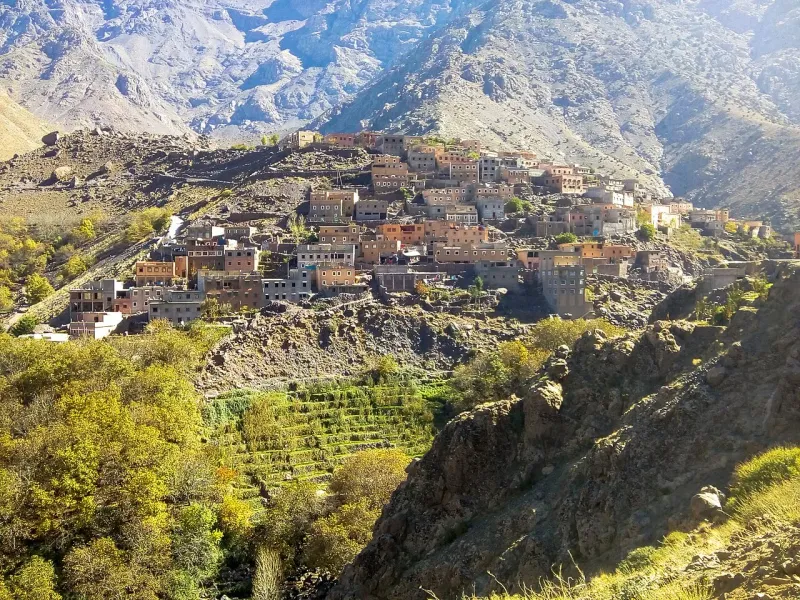
On the classic route, Imlil sits at approximately 1,741 m, the refuges around 3,200 m, and the summit at 4,167 m. A café terrace in Imlil, the refuge door before sunrise and the exposed summit ridge can feel like three different days. Use a forecast near the refuge and the summit for your climbing days, and get a guide report on the section above the refuge before choosing a start time. Use the village forecast separately to plan the drive and valley walking.
Month-by-month planning table
Temperatures are average daytime and nighttime values from Imlil Morocco’s 2017–2025 model summary at a model elevation of 4,131 m. They describe a point near the summit and exclude the effect of wind on how cold you feel. The right column is a planning interpretation. Sources checked 19 November 2026.
| Month | Summit model day / night | Main itinerary decision |
|---|---|---|
| January | −4°C / −11°C | Set up a winter trek and give the guide discretion to cancel if upper conditions close in. |
| February | −4°C / −11°C | Arrange appropriate winter equipment and time with the guide to practise before going high. |
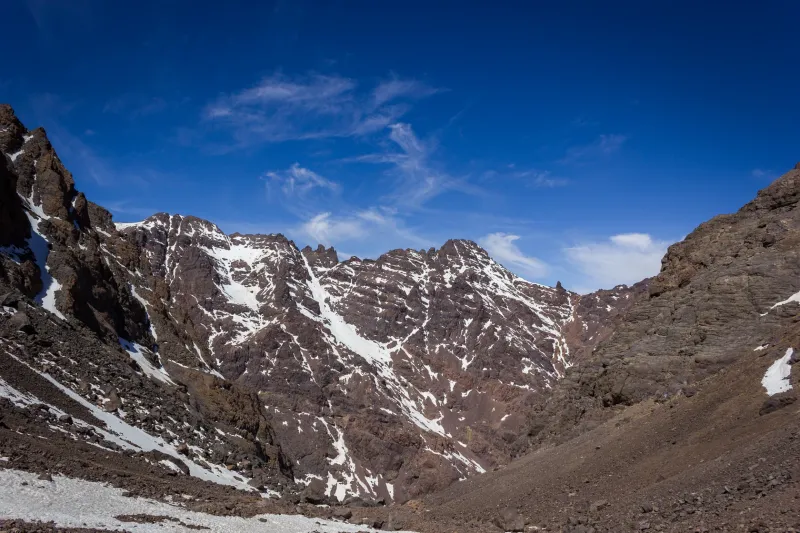
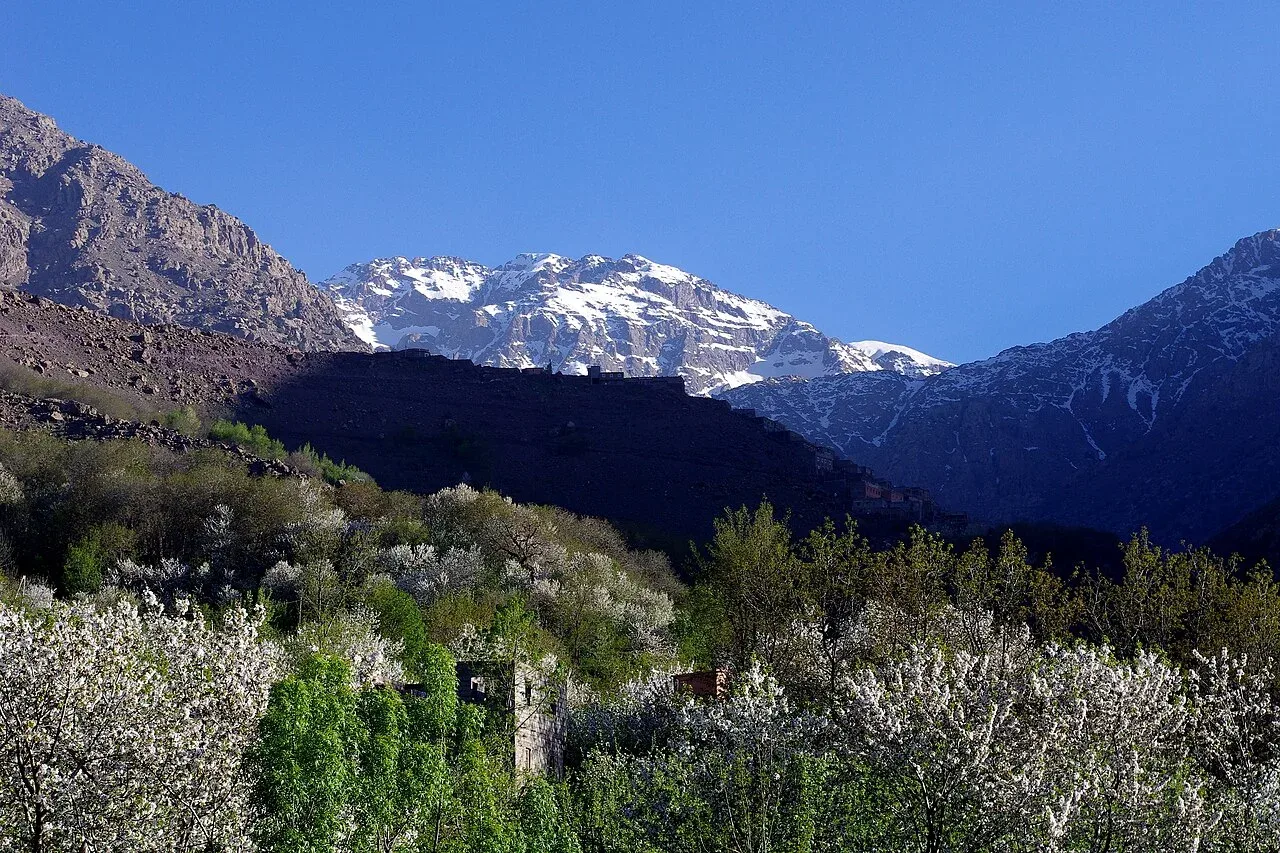
| March | −2°C / −10°C | Choose based on upper-route snow and ice. Spring in Imlil can coincide with winter at the refuge. |
| April | 2°C / −6°C | Plan for a possible change from village hiking shoes to a boot-and-crampon setup higher up. |
| May | 7°C / −2°C | Leave time to adapt if the guide sees old snow near the top or overnight ice on the ascent. |
| June | 11°C / 3°C | Start with a normal two- or three-day plan, early mornings, and a current report on remaining snow. |
| July | 15°C / 7°C | Start early for the heat on the lower trail and keep a warm layer for a windy summit. |
| August | 13°C / 6°C | Heat can slow the lower approach, and afternoon storms can affect exposed slopes. |
| September | 9°C / 2°C | Keep high wind and overnight cold in view even during a warm, dry week in the valley. |
| October | 5°C / −2°C | Treat early autumn and late autumn as different booking windows. Prepare for frost or early snow. |
| November | 0°C / −7°C | Freezing nights can leave ice on the upper route. |
| December | −3°C / −10°C | Winter itinerary, cold refuge mornings and a daylight-aware descent. Leave a flexible day. |
A High Atlas cryosphere study gives a second perspective. One monitored point at 3,815 m had sub-zero ground surface temperatures from October through March. The December to March period at that point also had continuous snow cover. This was a study site above the refuge basin. Snow cover on the walking route varies with recent storms, elevation and shade.
December to March in the refuge basin
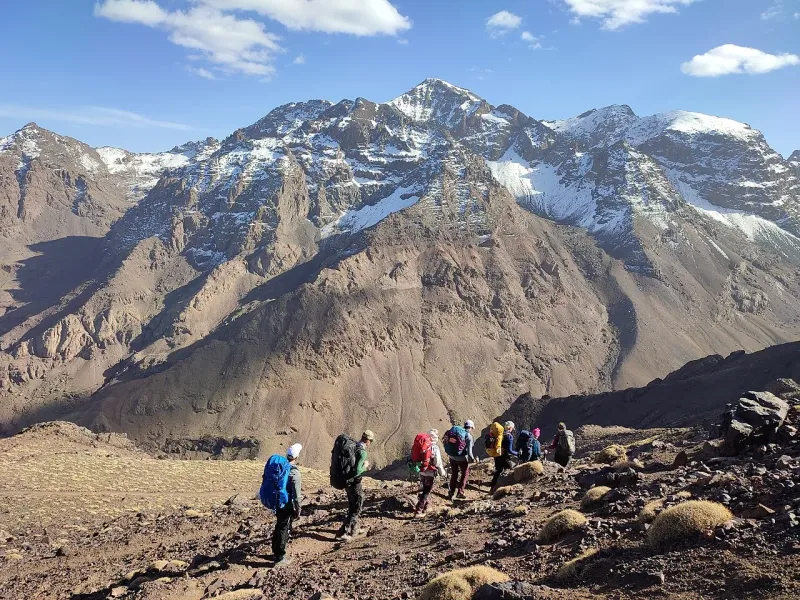
Start with the assumption that your guide might use a different date or call a stop at the refuge. Snow can hide the trail, a surface that looked soft in the afternoon can have hardened by dawn, and wind can make progress above the hut much slower than the valley forecast would suggest. Set aside the previous afternoon in Imlil for fitting equipment. The winter trekking guide explains the extra arrangements around boots, crampons and guide experience.
Pack so your warm layers and gloves are accessible before you step out of the refuge. It is awkward to unpack a tightly packed bag on the slope when you are already getting cold. Bring the equipment the guide selects for the actual route, and carry a headlamp even if the plan gives the party enough daylight. Your valley accommodation may open breakfast later than you leave, so arrange it at check-in.
April, May and June as conditions change
Lower sections can thaw while shaded upper stretches still hold snow or ice in April and May. Even a short icy stretch can make winter traction necessary. If the guide wants winter equipment, find a compatible fit in an Imlil rental shop before walking to Sidi Chamharouch.
June is a starting point for a refuge-based itinerary. Recent snow, wind or poor visibility can still alter the route. Take a thin layer you can walk in when the track warms and a windproof layer you can put on during a ridge stop. Have water on departure from Imlil even during mild weather. The climb continues well beyond the cafés and stalls of the lower trail.
July to September from valley heat to ridge wind
Summer starts early for a practical reason. The walk out of Imlil and the exposed switchbacks produce more heat than a summit-temperature table implies. Put a full bottle and a snack within reach so an overheated or hungry party can make short stops before the refuge. Little shade is available once the route leaves the lower valley. During the summit morning you may already be wearing a fleece, long trousers and gloves before the sun reaches the basin.
For a short September trip, consider one night in Imlil before starting. That leaves time to meet the guide and refill bottles before the walk. You also have a place to stay and a valley option if high wind or a storm disrupts your summit day. Leave the date of your return drive flexible enough to handle a later finish if the descent goes slowly.
October and November when the first freeze matters
A clear village forecast during the shoulder season can coexist with ice on a shady upper traverse. After rain or snow, an overnight freeze can make shaded sections icy in the morning. The route and the guide’s assessment of that surface determine which equipment is suitable. An October booking made weeks ahead can still turn into a winter-format walk.
The Neltner refuge’s published rates draw a different seasonal boundary. The non-member bed rate shown at the source was €27 from May through October and €32 from November through April, before meals. That boundary applies to the published room price. The upper route can need winter equipment on either side of it. The published tariff gives no year. Bed availability and meal timings depend on the date.
Decide when to go and keep a fallback
If your dates are fixed in winter and you have little experience on snow, budget for a guided lower walk or a first day practising movement somewhere suited to it. If you travel in spring or fall, leave enough room to make the gear decision once the recent route report is available. For a summer trip, spend the spare daylight on an early start and a better-paced descent. In every month, Sidi Chamharouch is worth considering as a separate walk when the upper route is unsuitable and the lower trail is operating normally.