Choose between a short High Atlas climb and a multi-day Kilimanjaro trek
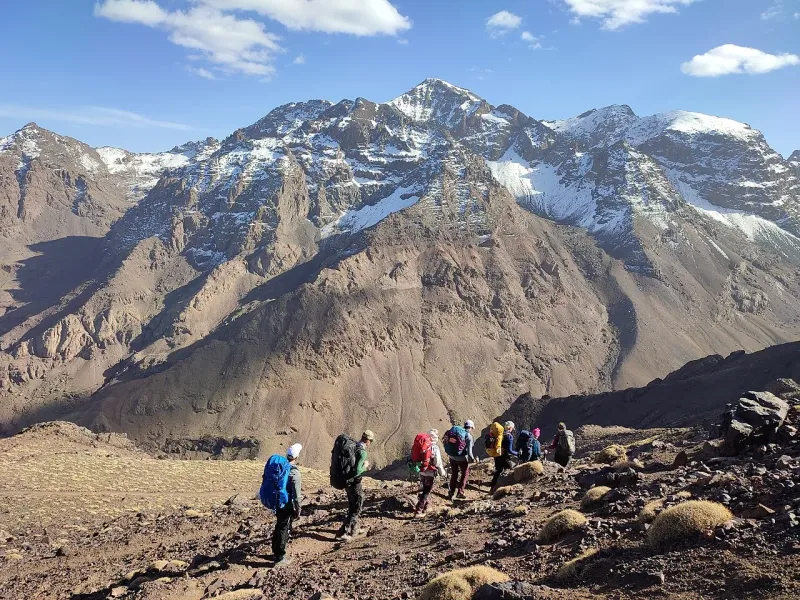
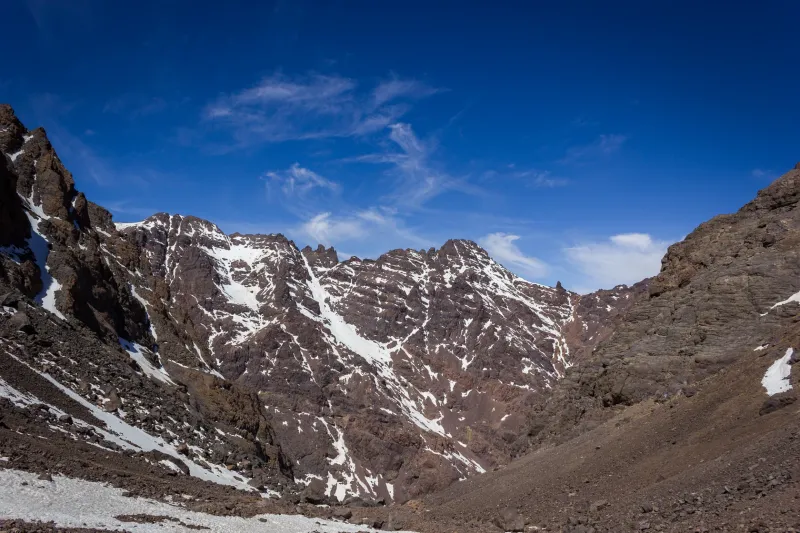
Mount Toubkal in Morocco is 4,167 m and usually fits into two or three trekking days from Imlil. Kilimanjaro in Tanzania reaches 5,895 m, or 1,728 m higher, and a route such as Machame takes six or seven days. Choose Toubkal if you want a shorter guided mountain trip with a refuge and a steep final descent. Choose Kilimanjaro for a longer expedition built around multiple high sleeping elevations and a specific route.
Toubkal is often the shorter undertaking, but its classic schedule concentrates the elevation gain. The route commonly goes from Imlil at 1,741 m to a refuge around 3,200 m for the first night. You might be headed to 4,167 m before dawn the next morning. Kilimanjaro’s usual tours allow much more time for walking toward the top, yet their stages end much higher and you are there for much longer. The right comparison for your first trip is the day-by-day plan.
Compare a Toubkal itinerary with two Kilimanjaro routes
Morocco figures are from the Visit Al Haouz summit guide and the Marrakech-Safi regional hiking brochure. Tanzania figures are from the Tanzania National Parks brochure and Marangu Hotel’s route elevations and Machame itinerary. Sources checked 19 November 2026.
Notice where the last bed sits. In both Tanzania examples you sleep well above the height of the Toubkal summit before beginning the final climb. On the Moroccan trip you return to a mountain hut or, if time allows, all the way to the village. The latter descent is still considerable. The regional brochure shows 2,480 m of descent on its refuge-to-summit-to-Imlil stage.
Toubkal’s shorter schedule makes each choice matter
If you have five days available in Morocco, you could travel to Imlil, sleep there, walk locally the next day and use the remainder for a two-day Toubkal climb and your return. An extra day on the trek can also place the return to Imlil after a second night at the refuge. Check the two- and three-day itineraries closely. A day in the valley and a night high after the summit change different parts of the plan. Extra time after going up is most useful for separating the long descent, while time before the summit is what you have available for acclimatization.
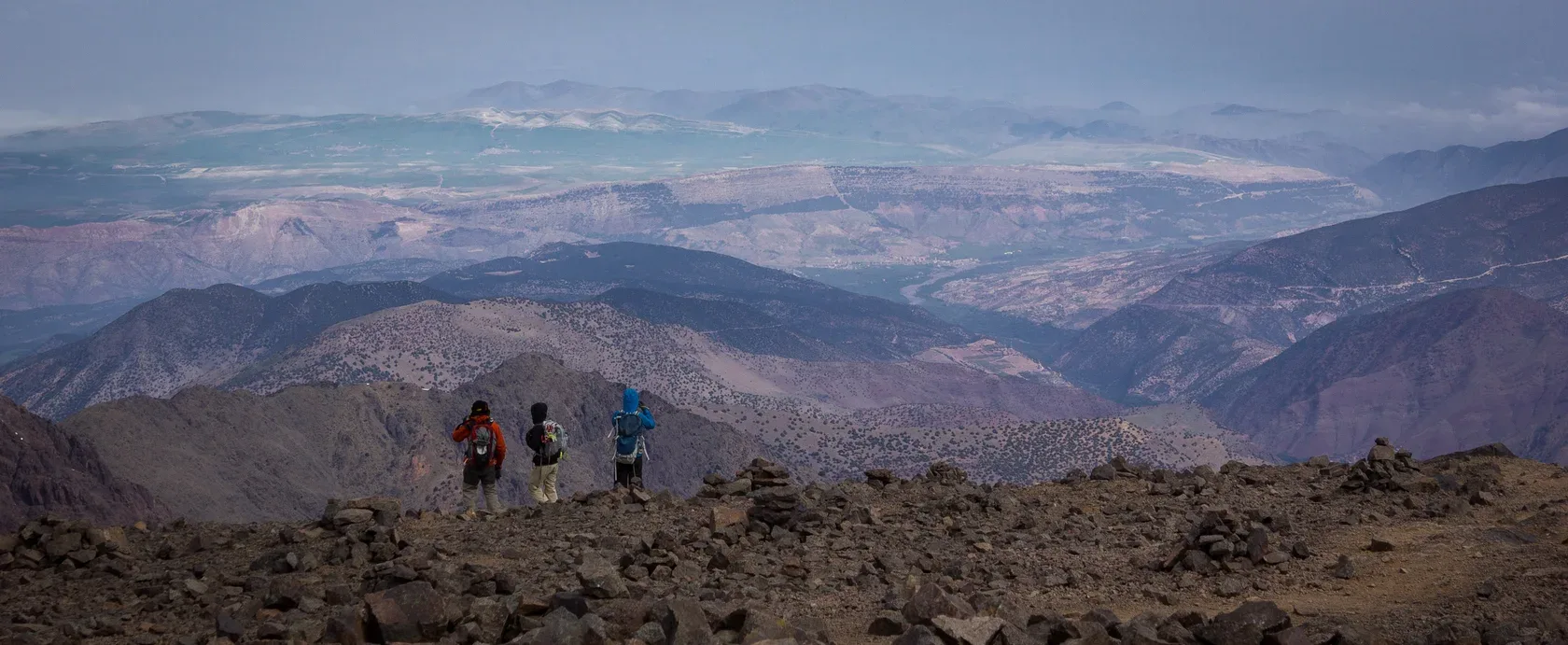
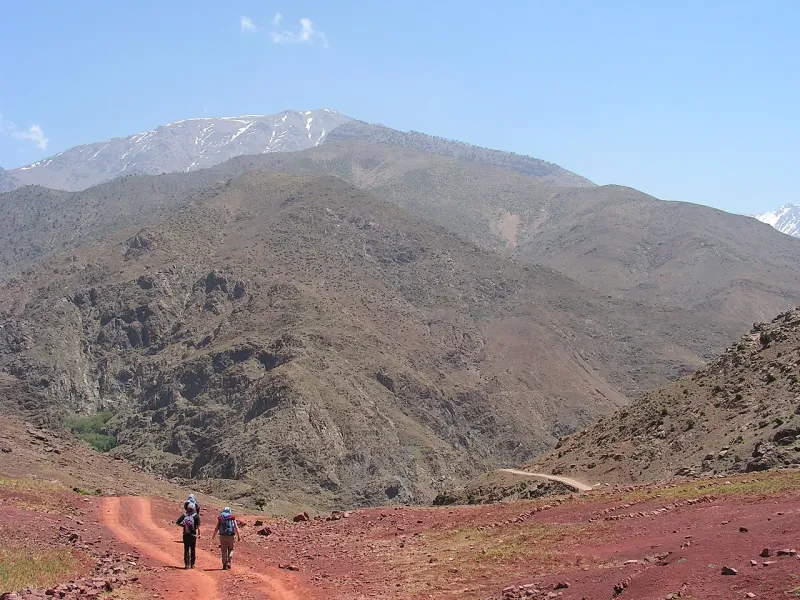
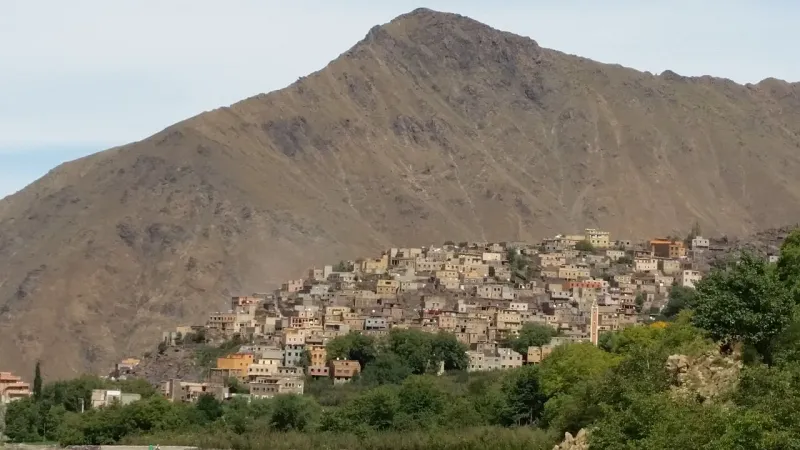
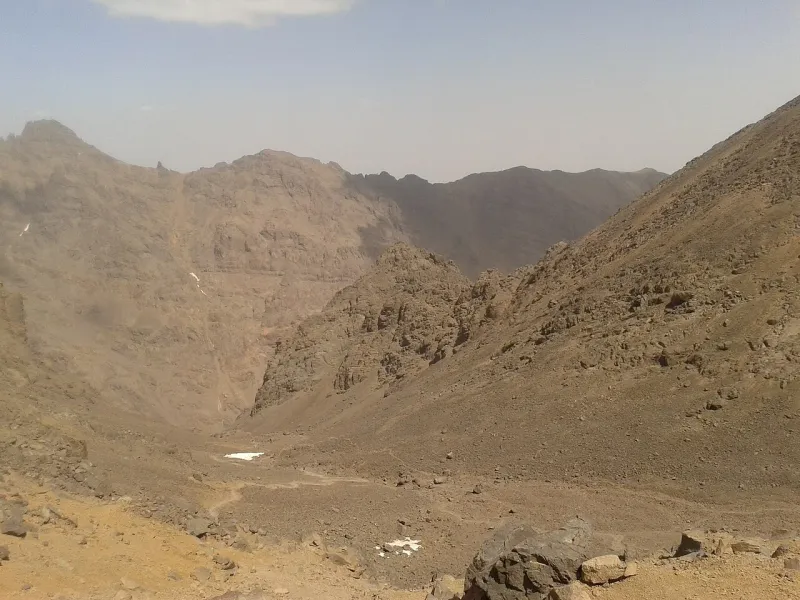
On the approach from Imlil, the climb via Aremd and Sidi Chamharouch looks like a sustained mountain hike with several places to stop. Above the refuge the walking changes to steeper, looser rock, depending on conditions. A useful comparison is whether you can manage careful downhill footwork after reaching the summit. At the hut there is one more decision, whether to stay or continue down through the shrine area and out to the valley. Return transport is often fixed around that last leg, so know what happens if the group arrives late.
Kilimanjaro spreads much more of the work across consecutive days. Even Marangu puts several higher huts between its gate and the summit. Machame adds camps and a different descent trail. Select the named route and identify its high nights, descent and evacuation arrangements before comparing products. Kilimanjaro itineraries describe different margins for acclimatization, just as Toubkal itineraries use their third day in different ways.
Can Toubkal help you prepare?
A Toubkal trek can give you experience using a headlamp, coordinating with a guide at a refuge and starting before dawn in the cold. Treat it as information about your pacing, comfort with a light daypack and how you felt at the heights you reached. You can see how well you eat, drink and layer through a changing mountain day. During a three-day plan you can also pay attention to how your legs feel through a second night and the final walk down.
A good experience on Toubkal cannot tell you how you will respond when sleeping higher than Toubkal’s summit. Read the Toubkal altitude sickness guide for what to track on the Moroccan route and use CDC altitude guidance when planning both trips. Kilimanjaro still warrants its own discussion about ascent rate, symptoms and the ability to leave the itinerary with a guide.
Conditions also change what practicing on Toubkal means. In snow-free weather you can work on long climbs and downhill movement on rock. Hard snow or ice on Toubkal can require crampons, suitable boots and winter skills, covered in the winter guide. Do not choose a winter date solely as a harder training exercise. Choose a date and guide according to your present ability and the conditions you intend to learn in.
Compare the trip you will pay for
For a Toubkal price comparison, write down nights in Marrakech and Imlil, the road legs, guide, refuge bed and meals, and equipment hire. A day of walking in the valley can carry its own guide cost. A private quote and a shared package can use different assumptions about transfers from Marrakech or whether the walk starts from Imlil. For Kilimanjaro, check total days on the mountain, gate fees, accommodation en route, meals, support crew arrangements and personal equipment in the quote. A cheaper itinerary may represent fewer days on the route, which affects exposure and time to acclimatize.
For a first guided summit, consider Toubkal when the village and refuge approach suit your dates and you can accommodate a long downhill day. A valley walk makes a sensible arrival-day plan or fallback if the upper route is unsuitable. Choose Kilimanjaro when you can reserve the time and budget for a full route, and want a multi-day high mountain trip in its own right. If you plan to climb both, schedule Toubkal for the kind of hiking and decision-making experience you want to bring to the next trip.
Pack for the refuge or camp
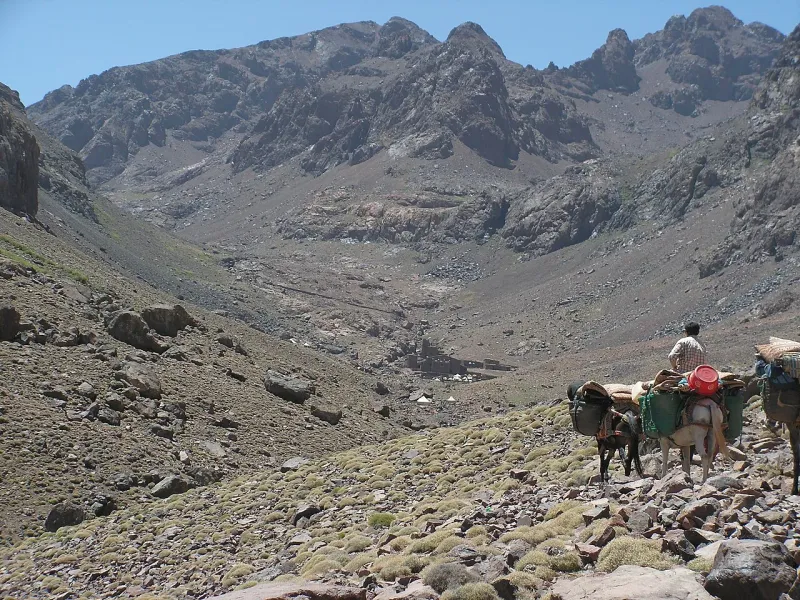
On a typical Toubkal trek, you can arrange for a mule to carry an overnight bag as far as the refuge. Keep a torch, water, extra layers and food in the pack you carry yourself. Plan to handle the upper stage with that pack and only the equipment you can use. A second refuge night or an early descent can require the bag to go down separately, so arrange who takes it and when. With Kilimanjaro you will have several nights’ equipment, handled according to your route and crew arrangements. Check bag limits with the operator and make sure access to spare clothing in the evening matches your itinerary.
If you include a few days in Marrakech around Toubkal, pack a small bag for the mountain separately from ordinary luggage. A lodge in Imlil can be convenient for sorting layers and deciding what to carry on the walking day. Keep enough time to collect what you left there even if you are coming off the mountain late. This shorter Morocco trip is especially easy to combine with valley time when your last day has space for that collection and the drive.